Brown Sugar: Nutrition, Health Benefits, Uses & Recipes

Brown sugar is a moist sweetener with a rich caramel-like flavor commonly used in baking, desserts, sauces, and marinades.
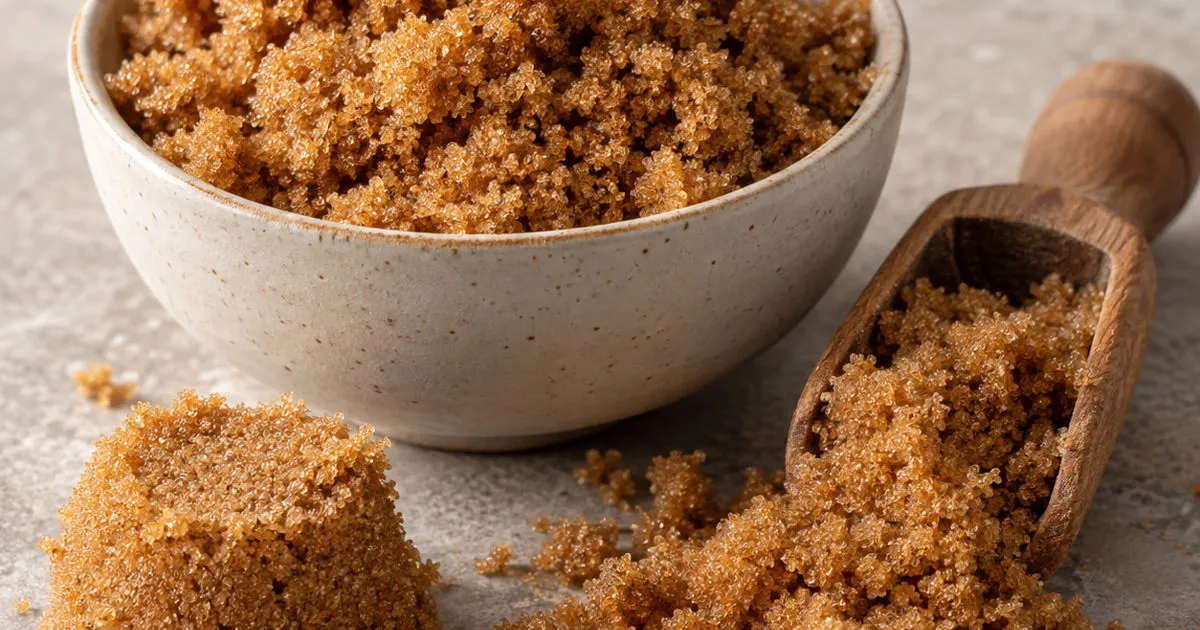
Brown sugar is a sweetener made from sugar combined with molasses, which gives it its characteristic brown color, moist texture, and rich caramel-like flavor. It is commonly used in cookies, cakes, muffins, sauces, marinades, glazes, and desserts.
Brown sugar is one of the most useful baking ingredients because it does more than add sweetness. Its molasses content contributes moisture, flavor, color, and texture to many baked goods.
What Is Brown Sugar?
Brown sugar is a type of sugar that contains molasses. The molasses gives the sugar a deeper flavor, darker color, and softer, more moist texture compared with regular granulated white sugar.
It is widely used in both sweet and savory cooking. In baking, brown sugar can influence moisture, browning, spread, chewiness, and flavor, making it especially popular in cookies, cakes, quick breads, and muffins.
What Is Brown Sugar Made Of?
Brown sugar is primarily made of sucrose and molasses. Many commercial brown sugars are produced by adding molasses to refined white sugar, although production methods can vary.
The amount of molasses determines much of the sugar’s color, moisture, and flavor. More molasses generally produces a darker sugar with a stronger caramel and molasses flavor.
Light Brown Sugar vs Dark Brown Sugar
The main difference between light brown sugar and dark brown sugar is the amount of molasses they contain. Light brown sugar contains less molasses and has a milder flavor, while dark brown sugar contains more molasses and has a deeper color and stronger flavor.
- Light brown sugar: mild caramel flavor and commonly used in cookies, cakes, muffins, and other everyday baked goods.
- Dark brown sugar: stronger molasses flavor that works well in gingerbread, rich sauces, marinades, glazes, and deeply flavored desserts.
They can often be used interchangeably when a recipe does not specifically depend on the stronger molasses flavor of dark brown sugar, although the finished flavor and color may be slightly different.
Taste and Texture
Brown sugar has a sweet, caramel-like flavor with noticeable molasses notes. Light brown sugar is relatively mild, while dark brown sugar has a deeper and more pronounced molasses flavor.
Its texture is soft and slightly moist. This moisture can help baked goods such as cookies remain softer and chewier than recipes made exclusively with granulated white sugar.
How Brown Sugar Works in Baking
Brown sugar contributes sweetness while also affecting the moisture, texture, color, and flavor of baked goods. The molasses in brown sugar helps retain moisture and can contribute to a softer or chewier texture.
Brown sugar can also interact with leavening ingredients such as baking soda. Because recipes depend on a balance of sugar, moisture, fat, flour, and leavening agents, changing the type or amount of sugar may alter the final result.
How to Use Brown Sugar
- Cookies: adds sweetness, moisture, caramel flavor, and can contribute to a chewy texture.
- Cakes and muffins: provides sweetness and a deeper flavor than white sugar alone.
- Quick breads: works especially well in banana bread and other moist baked goods.
- Sauces and glazes: adds sweetness, color, and caramel-like flavor.
- Marinades: balances salty, spicy, and acidic ingredients.
- Oatmeal and breakfast dishes: provides quick sweetness and molasses flavor.
- Desserts: commonly used in crumbles, pies, puddings, and caramel-flavored recipes.
Brown Sugar Substitute
If you do not have brown sugar, a common homemade substitute can be made by combining granulated white sugar with molasses. The amount of molasses can be adjusted depending on whether you want a lighter or darker brown sugar flavor.
Granulated sugar may also replace brown sugar in some recipes, but the finished food can have a different flavor, moisture level, spread, and texture. Baking recipes are particularly sensitive to ingredient substitutions, so a tested substitution is preferable when possible.
How to Soften Brown Sugar
Brown sugar can become hard when it loses moisture during storage. To soften it, place the sugar in an airtight container with a source of moisture, such as a small piece of bread, for a limited period until the sugar softens. Remove the added item afterward.
For a faster method, hardened brown sugar can be gently warmed using an appropriate microwave-safe method, but care should be taken not to melt the sugar.
How to Store Brown Sugar
Brown sugar should be stored in a tightly sealed, airtight container in a cool, dry place. Limiting exposure to air helps preserve its moisture and prevents it from becoming hard.
- Keep brown sugar in an airtight container.
- Store it away from excessive heat and moisture.
- Close the container immediately after measuring the sugar.
- If the sugar hardens, it can usually be softened by restoring moisture carefully.
Brown Sugar Nutrition Facts
Brown sugar consists primarily of carbohydrates in the form of sugar and is mainly used as a sweetener. It contains small amounts of minerals associated with molasses, but these amounts are generally not large enough to make brown sugar a significant source of essential nutrients.
Because brown sugar is an added sugar, it is generally best used in moderation as part of an overall balanced diet. Exact nutrition values can vary slightly depending on the product and its molasses content.
Related Baking Ingredients
Recipes with Brown Sugar
Explore recipes made with brown sugar, including cookies, cakes, muffins, quick breads, pancakes, sauces, glazes, and desserts. Its combination of sweetness, moisture, and molasses flavor makes brown sugar a versatile ingredient for everyday baking and cooking.